


6.0 Powerstroke EGR Delete Kit Guide: Fitment & Options
A 6.0 Powerstroke EGR delete kit is designed around the factory EGR cooler and EGR valve system used on the 2003–2007 6.0L Powerstroke. This guide explains how that system works, common EGR-related problems, kit differences, year and F-250/F-350 fitment considerations, tuning options, supporting upgrades, and what to compare before choosing parts for a dedicated competition or off-highway build.
The goal is not to treat every 6.0L truck the same. A stock 2004 F-250, a modified 2006 F-350 and a truck that already has tuning or exhaust hardware may require very different parts. For that reason, this guide also compares a complete all-in-one solution with building a custom configuration one component at a time.
6.0 Powerstroke EGR Delete Kit: Quick Answer
TL;DR
- The 6.0L Powerstroke is associated with 2003–2007 Ford Super Duty diesel applications.
- Its factory emissions architecture uses an EGR valve and liquid-cooled EGR cooler.
- The 2003–2007 6.0L platform predates the later Super Duty DPF and DEF/SCR architecture, so a 6.0L EGR kit should not be confused with a later-model DPF/DEF delete setup.
- Kit configurations can differ in block-off hardware, coolant routing, up-pipe design and whether compatible tuning is included or purchased separately.
- The correct choice depends on model year, truck configuration, existing modifications and intended use.
- For a complete starting point, Tuner Depot offers an all-in-one 6.0L EGR solution with tuning.
- If you already own some parts, the Custom Kit Builder lets you select a configuration step by step instead of purchasing duplicate components.
What Is a 6.0L Powerstroke EGR Delete Kit?
An EGR delete kit for the 6.0L Powerstroke is a group of components intended to address the engine's factory Exhaust Gas Recirculation hardware in a dedicated competition or off-highway configuration where lawful.
Depending on the kit design, the hardware may address the EGR cooler, EGR valve connection, exhaust-side routing and coolant circuit. Some packages are hardware-only. Others combine hardware with a compatible tuning solution or additional exhaust-side parts.
This distinction matters when comparing a standalone Ford 6.0 EGR delete kit with a more complete 6.0 Powerstroke delete-kit configuration. Buying the largest package is not automatically the right choice if the truck already has compatible components installed.
How Does the EGR System Work on a 6.0 Powerstroke?
EGR stands for Exhaust Gas Recirculation. Under the factory calibration, the system routes a controlled portion of exhaust back toward the intake to reduce combustion temperature and nitrogen-oxide emissions under applicable operating conditions.
The 6.0L uses a liquid-cooled EGR cooler. Hot exhaust passes through the cooler while engine coolant carries heat away. The cooled exhaust is then managed through the EGR valve before entering the intake stream. The engine-control strategy monitors and manages this system as part of the vehicle's original emissions configuration.
Why this matters when diagnosing a 6.0L: the EGR cooler does not operate in isolation. Cooling-system condition, exhaust flow, intake condition, turbo operation and electronic controls can all affect what symptoms the truck shows.
Does a 2003–2007 6.0 Powerstroke Have a DPF or DEF System?
This is an important distinction because searches for “6.0 Powerstroke DPF delete” and “6.0 DPF delete” are common even though they mix terminology from different Powerstroke generations.
The 2003–2007 6.0L Powerstroke Super Duty predates the later Ford diesel aftertreatment architecture that uses a diesel particulate filter and, later, DEF/SCR. The emissions component most relevant to a 6.0L EGR discussion is the factory EGR system.
If you are researching a 6.0L truck, verify the engine and model year before ordering parts rather than assuming a product described for a later 6.4L or 6.7L Powerstroke applies to the 6.0L.
Why Do 6.0 Powerstroke Owners Investigate the EGR System?
EGR-related concerns are one reason the 6.0L has such a large repair and aftermarket ecosystem. The correct response starts with diagnosis rather than assuming that every drivability or coolant problem is caused by one component.
-
Coolant Loss Unexplained coolant loss should be diagnosed promptly. The EGR cooler is one possible area to inspect, but the complete cooling system should be pressure-tested and evaluated.
-
White Exhaust Smoke or Steam Persistent white exhaust output can indicate coolant entering a path where it does not belong. Diagnosis should determine the actual source before parts are ordered.
-
EGR-Related Diagnostic Codes Fault codes can point toward EGR flow, valve operation or related control issues, but a code identifies the system being monitored rather than automatically proving which component failed.
-
Cooling-System Contamination Coolant condition and debris matter on the 6.0L. Cooling-system maintenance should be considered before modifying or replacing EGR-related hardware.
-
Intake Deposits Recirculated exhaust can contribute to deposits in the intake path over time. Actual buildup varies with engine condition, duty cycle and maintenance history.
-
High-Mileage Unknowns Many 6.0L trucks have changed owners or been modified previously. Identify existing tuning, exhaust, EGR, fuel and cooling modifications before planning the next change.
What Is Included in a 6.0 Powerstroke EGR Delete Kit?
There is no universal parts list for every kit. The exact contents depend on design, so the product-specific included-parts list should always be treated as the final reference.
-
EGR Block-Off Hardware Components designed to address applicable EGR passages and connections.
-
Coolant-Routing Components Depending on kit design, fittings or hoses may be included to address the coolant circuit associated with the original EGR cooler.
-
Gaskets and Installation Hardware Kit-specific gaskets, fasteners, clamps or related hardware may be supplied for the applicable configuration.
-
Up-Pipe on Selected Kits Some configurations include an up-pipe, while others are intended for customers retaining or separately sourcing exhaust-side components.
-
Tuning on Selected Packages A hardware-only EGR kit and an all-in-one package are not the same product. Confirm whether compatible tuning is included before ordering.
2003–2007 6.0L Powerstroke EGR Delete Kit Fitment Guide
Whether you are researching a 2003, 2004, 2005, 2006 or 2007 6.0 Powerstroke EGR delete kit, start with the exact model year and current truck configuration. This covers the year-specific search intent without assuming every piece of hardware is identical across the entire production run.
| Model Year | Engine | Common Super Duty Searches | What to Verify |
|---|---|---|---|
| 2003 | 6.0L Powerstroke | F-250 / F-350 | Early-production configuration and exact kit fitment |
| 2004 | 6.0L Powerstroke | F-250 / F-350 | Model year, existing EGR hardware and exhaust configuration |
| 2005 | 6.0L Powerstroke | F-250 / F-350 | Existing modifications and kit-specific compatibility |
| 2006 | 6.0L Powerstroke | F-250 / F-350 | Tuning, EGR hardware and current exhaust setup |
| 2007 | 6.0L Powerstroke | F-250 / F-350 | Exact product fitment and existing modifications |
What about F-450 and F-550 trucks? Some 6.0L products also support heavier Super Duty applications, but compatibility can differ by component. Use the fitment information on the specific product rather than assuming F-250/F-350 fitment automatically covers every chassis.
What Makes the Best 6.0 Powerstroke EGR Delete Kit for Your Build?
“Best” depends on the truck. A complete kit can be the better option for a build starting from scratch, while a standalone EGR kit may make more sense when compatible tuning or exhaust hardware is already installed.
-
Correct Model-Year Fitment The first requirement is compatibility with the exact 2003–2007 truck being worked on.
-
Complete Hardware for the Selected Design Know whether the configuration supplies block-off hardware, coolant-routing components, gaskets, clamps and any required exhaust-side parts.
-
Appropriate Coolant Routing The cooling system is too important on a 6.0L to treat coolant-routing components as an afterthought.
-
Up-Pipe Configuration Determine whether the existing exhaust-side hardware will remain or whether a kit with an up-pipe better matches the planned build.
-
Compatible Tuning Strategy Do not assume a hardware-only kit includes a tuner or calibration. Compare what is actually included.
-
Build Around Existing Parts If the truck already has compatible components, selecting only what is missing can avoid paying twice for the same type of part.
Compare 6.0L Powerstroke EGR Kit Options
These configurations serve different buyers. The complete option is intended to simplify a new build, while the individual EGR kits provide more flexibility when the truck already has supporting components.
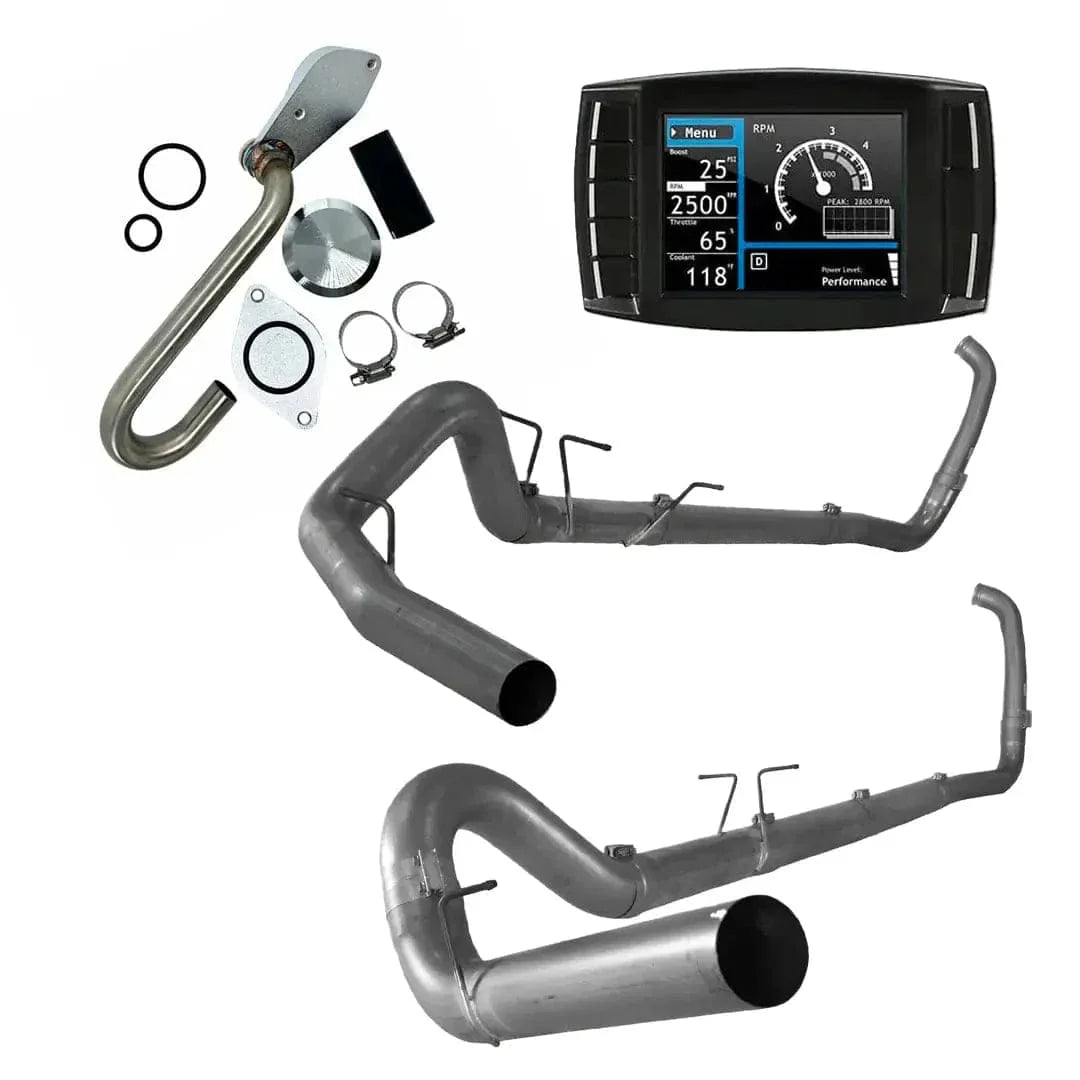
6.0L Powerstroke EGR Delete Kit with Tuning
2003–2007 Ford F-250 / F-350
- Designed as a complete starting point
- EGR hardware and compatible tuning solution
- Reduces the need to source major components separately
- Best suited to customers building a complete configuration
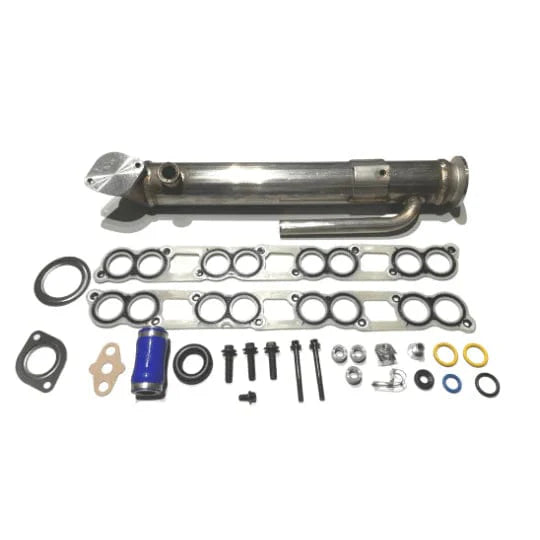
6.0L Powerstroke Welded EGR Delete Kit
Ford 2003–2007 — verify exact product fitment
- Welded EGR configuration
- Hardware-focused solution
- Useful when supporting components are already owned
- Check the product configuration before ordering
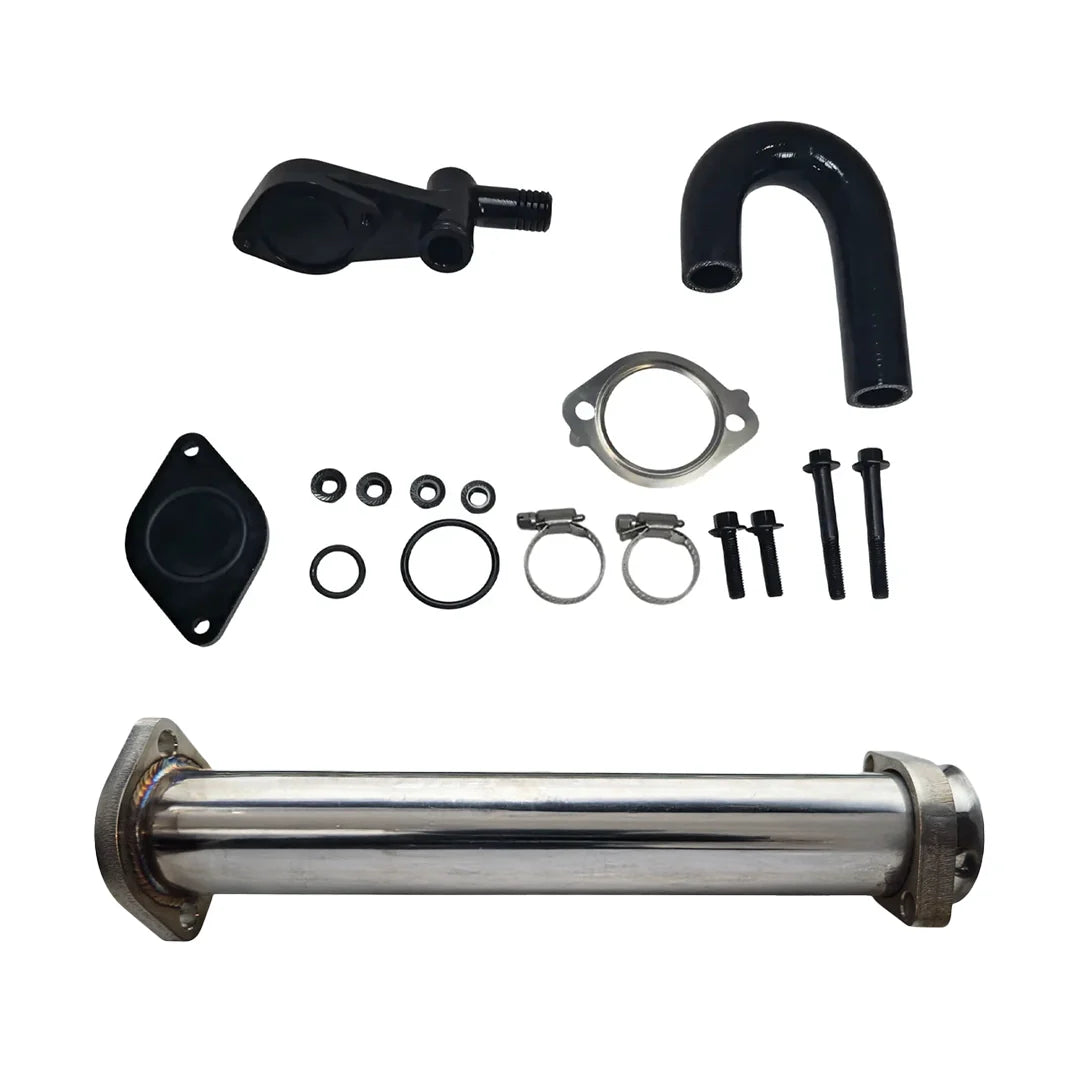
6.0L Powerstroke EGR Delete Kit with Up-Pipe
2003–2007 Ford Powerstroke
- Includes an up-pipe configuration
- Addresses EGR and exhaust-side component selection together
- Useful when replacing more of the existing hardware
- Verify exact application before purchase
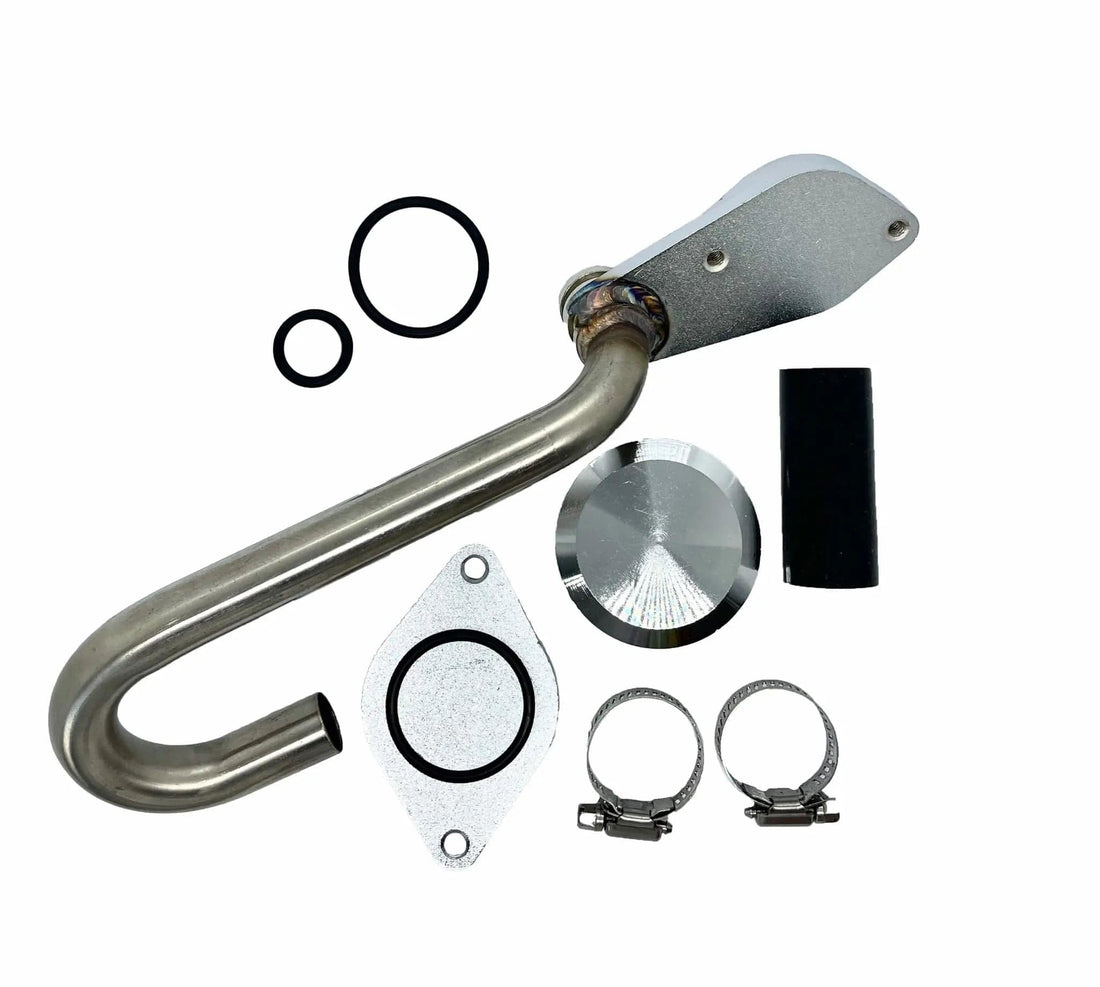
6.0L Powerstroke EGR Delete Kit
Ford 2003–2007
- Standalone EGR hardware option
- Suitable for component-by-component builds
- Avoids forcing a tuner into every configuration
- Check what is already installed on the truck
EGR Delete Kit vs. Complete 6.0 Powerstroke Setup
A common source of confusion is treating an EGR hardware kit and a complete build as interchangeable. They solve different purchasing needs.
| Configuration | Best For | Main Advantage | What to Check |
|---|---|---|---|
| EGR Hardware Kit | Existing modified build | Purchase only the EGR-side hardware | Tuning and supporting parts may be separate |
| EGR Kit + Up-Pipe | Exhaust-side work at the same time | Combines related hardware | Existing pipe and exhaust configuration |
| All-in-One Kit | Starting a complete build | Main components selected as a package | Review exact included components |
| Custom Kit Builder | Truck already has some parts | Build around existing components | Know the truck's current setup first |
When Does the All-in-One 6.0L Powerstroke Kit Make Sense?
An all-in-one configuration is most useful when the truck is starting with few or none of the required aftermarket components and the buyer wants a simpler purchasing path.
Instead of separately identifying EGR hardware and a compatible tuning solution, the complete package provides a coordinated starting point for the 2003–2007 6.0L platform. That reduces the risk of buying a hardware-only kit and later discovering that another major component still needs to be sourced.
It is not automatically the most economical option for every truck. If you already own a compatible tuner or have already replaced some of the required hardware, building around those components may make more sense.
Starting a complete 2003–2007 6.0L Powerstroke build?
View the 6.0L Powerstroke All-in-One KitBuild Your Own 6.0 Powerstroke Delete Kit Step by Step
Build the Kit Around Your Truck — Not Around a Fixed Package
Not every 6.0L owner starts from the same point. One truck may already have a compatible tuner. Another may already have exhaust work completed. A third may need the entire setup.
The Tuner Depot Custom Kit Builder lets you work through the configuration step by step, starting with vehicle information and then choosing the components needed for that specific build.
-
Enter Your Vehicle Start with year, make, model and engine so the build is based on the truck rather than a generic diesel-parts list.
-
Select Your Tuning Configuration Choose a compatible tuning option where needed, or build around a compatible device you already own.
-
Choose the EGR Hardware Select the EGR configuration appropriate for the planned build instead of accepting whichever hardware comes in a fixed bundle.
-
Select the Exhaust Configuration Where applicable, choose the exhaust components appropriate for the truck and existing setup.
-
Add Supporting Components Consider intake, monitoring or other supporting upgrades based on the goals and current condition of the truck.
-
Review the Complete Build Check the full configuration before ordering to reduce duplicate or mismatched parts.
Complete kit or custom build? Choose the all-in-one package when you need the main components together. Use the Custom Kit Builder when you already own parts, want a specific tuner or need more control over each component selected.
What Tuner do I need for 6.4 Powerstroke DPF Delete Tuning?
Tuning should be selected by exact vehicle compatibility, existing modifications and intended application. A device supporting several Powerstroke generations may still use different calibrations for each engine.
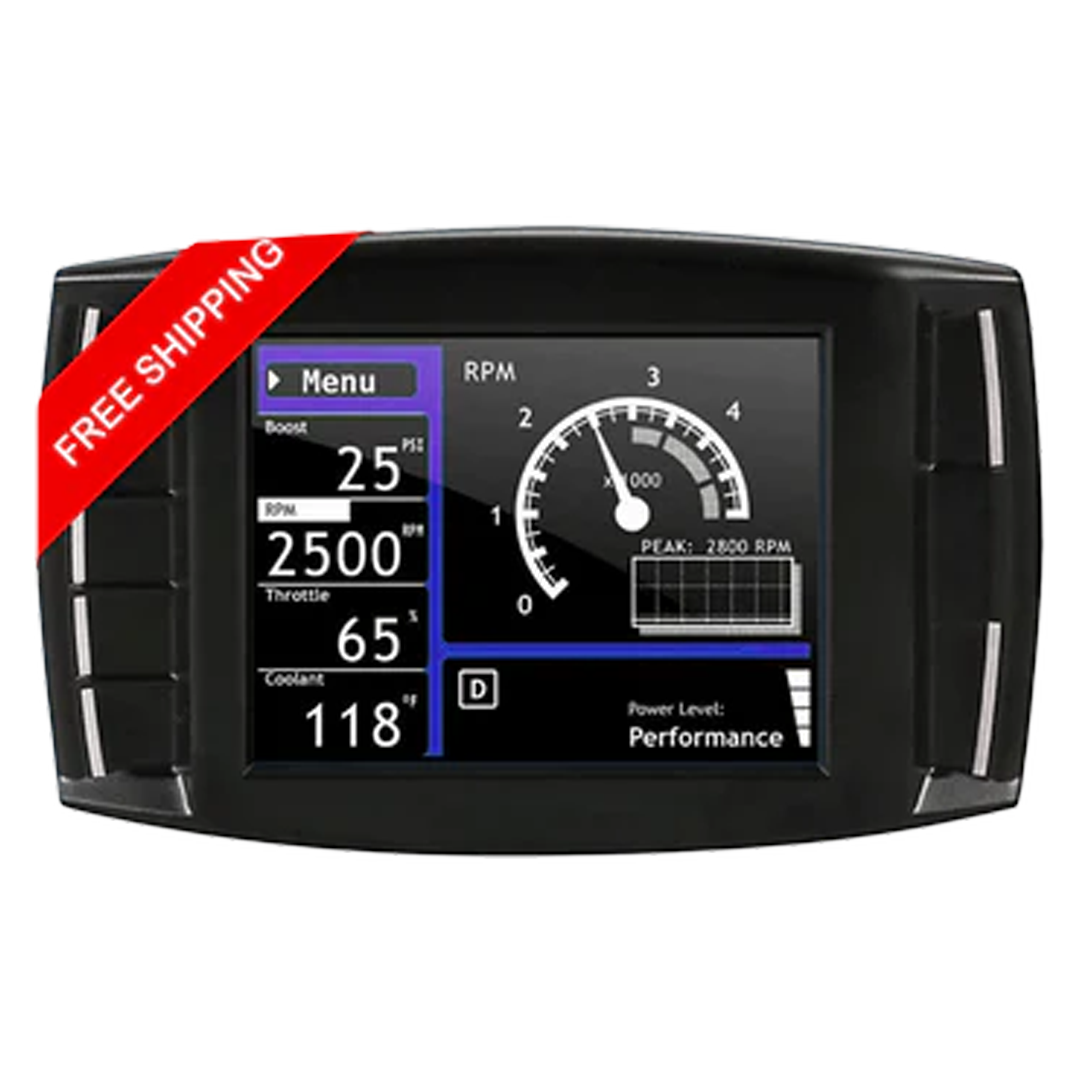
H&S Performance Mini Maxx Tuner V1
Powerstroke tuning option
- Handheld tuning platform
- Commonly associated with older Powerstroke applications
- Verify exact year and calibration support
- Confirm compatibility with existing modifications
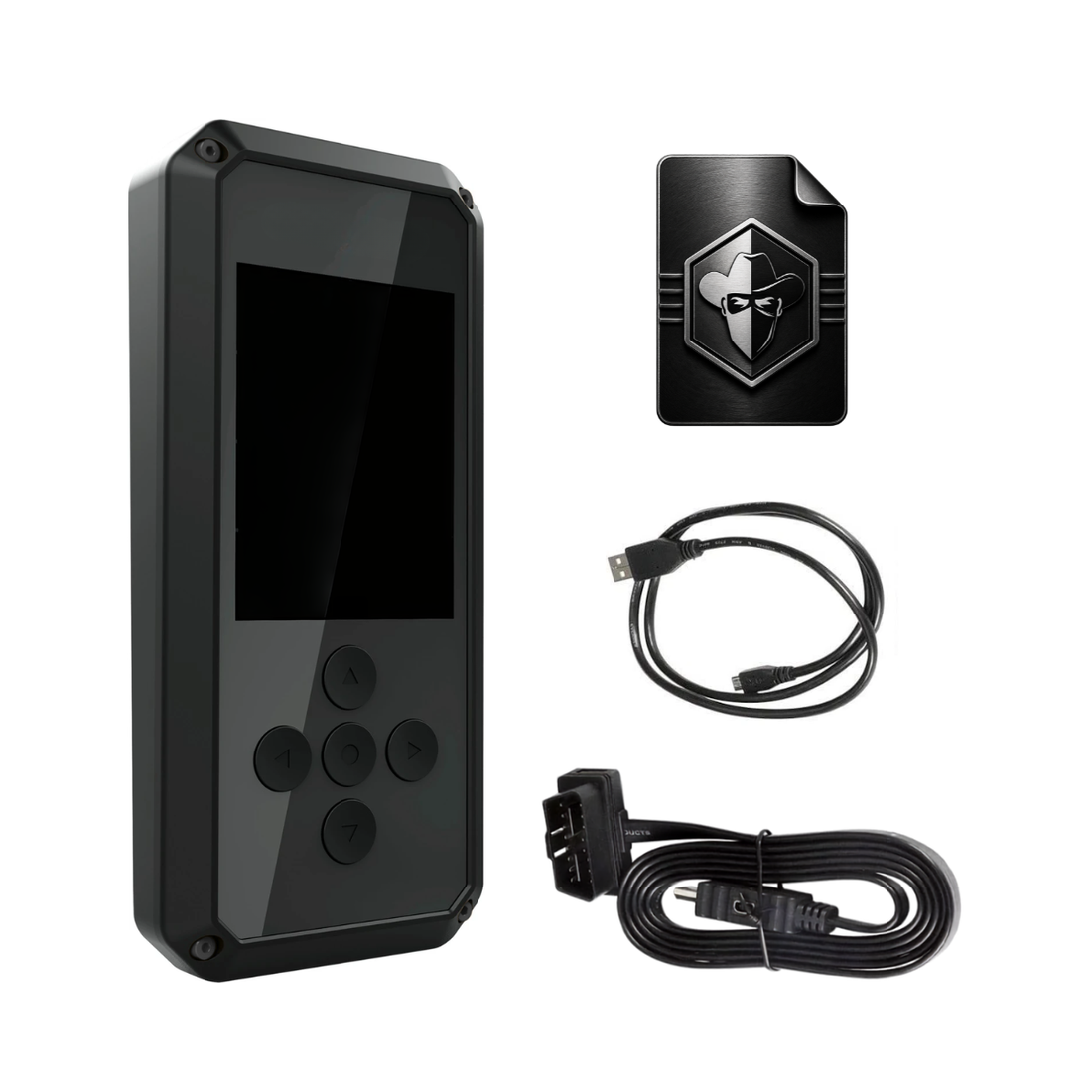
Performance Programmer with Powerstroke Tunes
6.0L / 6.4L / 6.7L Powerstroke applications
- Powerstroke-focused programming option
- Covers multiple Ford diesel generations
- Useful for comparing tuning platforms
- Select the exact supported truck configuration
What Is Involved in 6.0 Powerstroke EGR Removal?
Searches such as “deleting EGR 6.0 Powerstroke,” “6.0 EGR delete how to” and “6.0 Powerstroke EGR removal” usually come from owners trying to understand the scope of the job. The important point is that this is more involved than installing a simple external accessory.
1. Diagnose the Truck First
Record existing diagnostic codes and evaluate cooling-system, fuel, turbo and exhaust condition before changing the configuration. A modification should not be used to hide an unrelated mechanical problem.
2. Identify the Existing EGR Configuration
Determine which factory or aftermarket EGR components are currently present. High-mileage trucks may already contain replacement or modified hardware installed by a previous owner.
3. Account for the Coolant Circuit
Because the factory EGR cooler is liquid-cooled, any applicable hardware change must account for the cooling-system configuration specified by the kit being used.
4. Check Exhaust-Side Hardware
Some kits retain more of the existing exhaust-side configuration, while others include an up-pipe. This is one reason kit contents should be compared before purchasing.
5. Verify the Calibration Strategy
Engine-management changes should only be performed with a calibration appropriate for the exact truck, hardware configuration and lawful intended application.
6. Recheck the Complete Truck
After any substantial engine or exhaust work, inspect coolant level, hose and exhaust connections, diagnostic status and general engine operation before placing the truck under significant load.
6.0L Powerstroke Exhaust and Turbo-Side Upgrades
Exhaust condition affects a turbocharged diesel independently of the EGR system. Pre-turbo leaks, damaged piping and restrictive or poorly fitted components can affect turbo response and drivability.
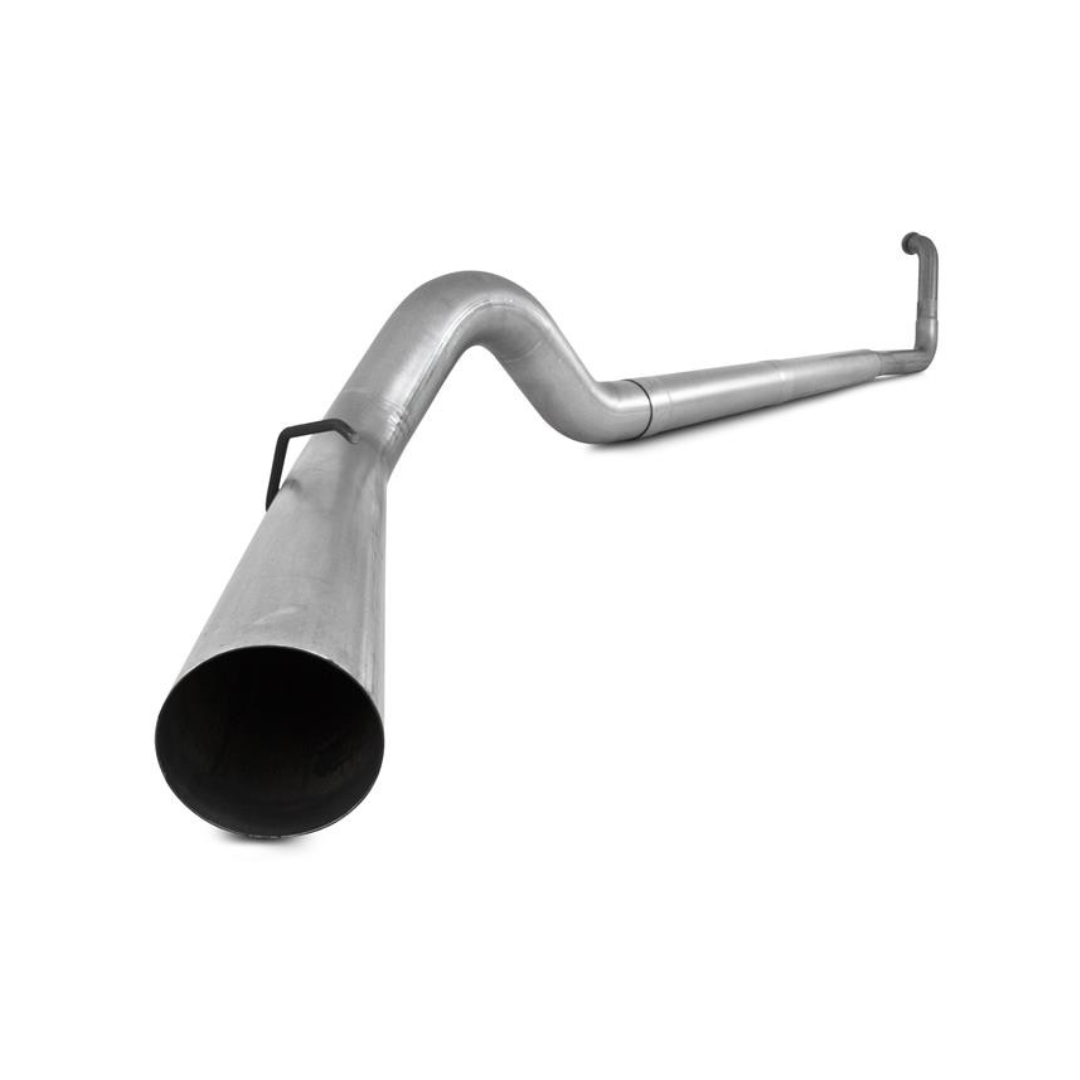
6.0L Powerstroke Turbo-Back Exhaust System
Ford 2003–2007
- 6.0L-specific turbo-back configuration
- For applicable competition/off-highway builds
- Useful when replacing more of the exhaust system
- Verify truck and exhaust configuration
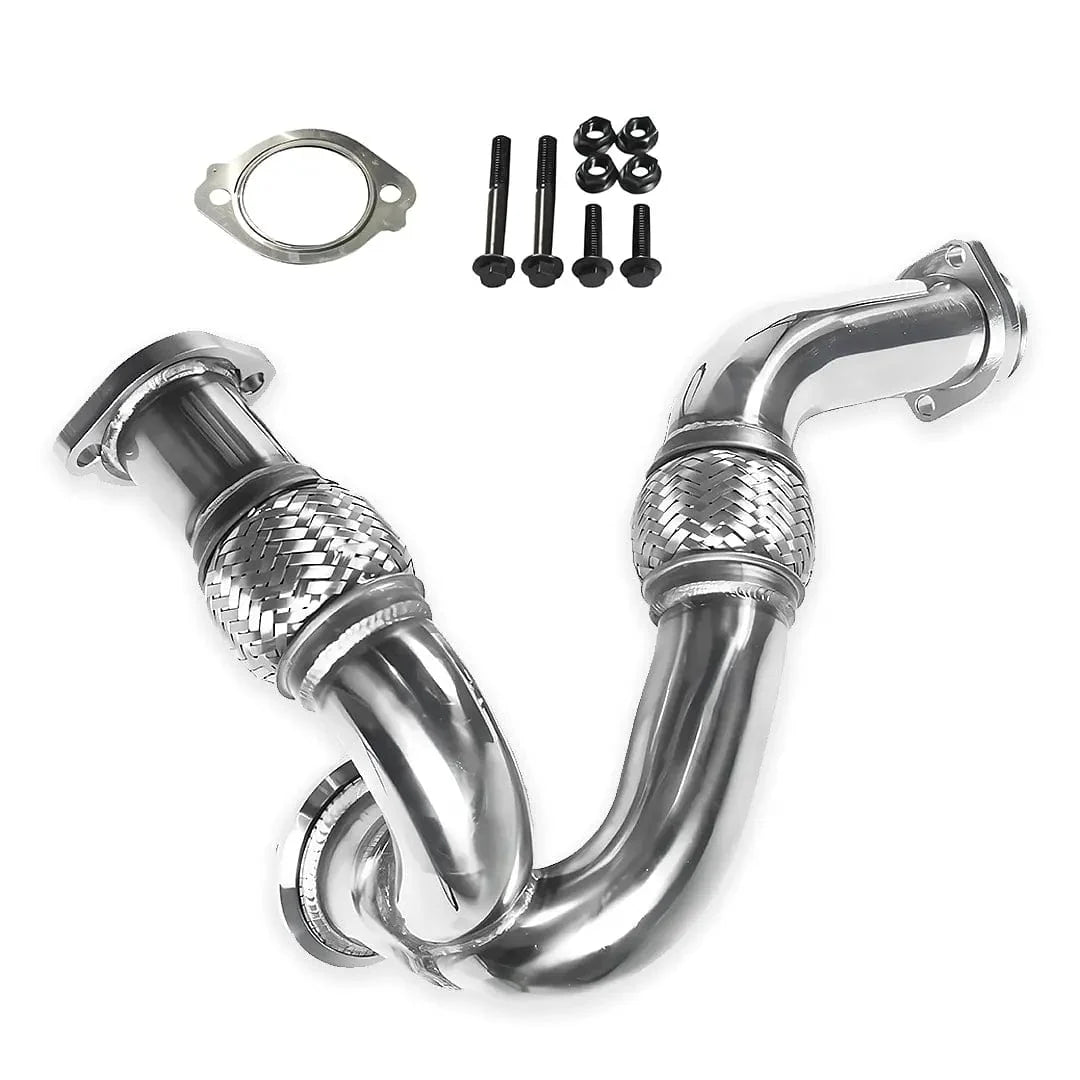
6.0L Powerstroke Turbo Y-Pipe
Ford 2003–2007
- Pre-turbo exhaust component
- Relevant when repairing damaged or leaking piping
- Designed for the 6.0L platform
- Check surrounding exhaust hardware during installation
Cooling and Fuel-System Upgrades Worth Considering
EGR hardware receives a lot of attention, but a dependable 6.0L build also depends on cooling-system condition and consistent fuel delivery.
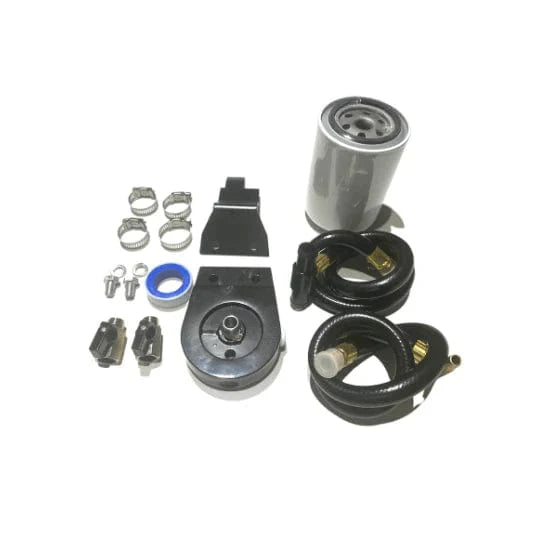
6.0L Powerstroke Coolant Filtration System
Ford 2003–2007
- Designed to filter suspended cooling-system debris
- Relevant to maintenance-focused 6.0L builds
- Supports a broader cooling-system strategy
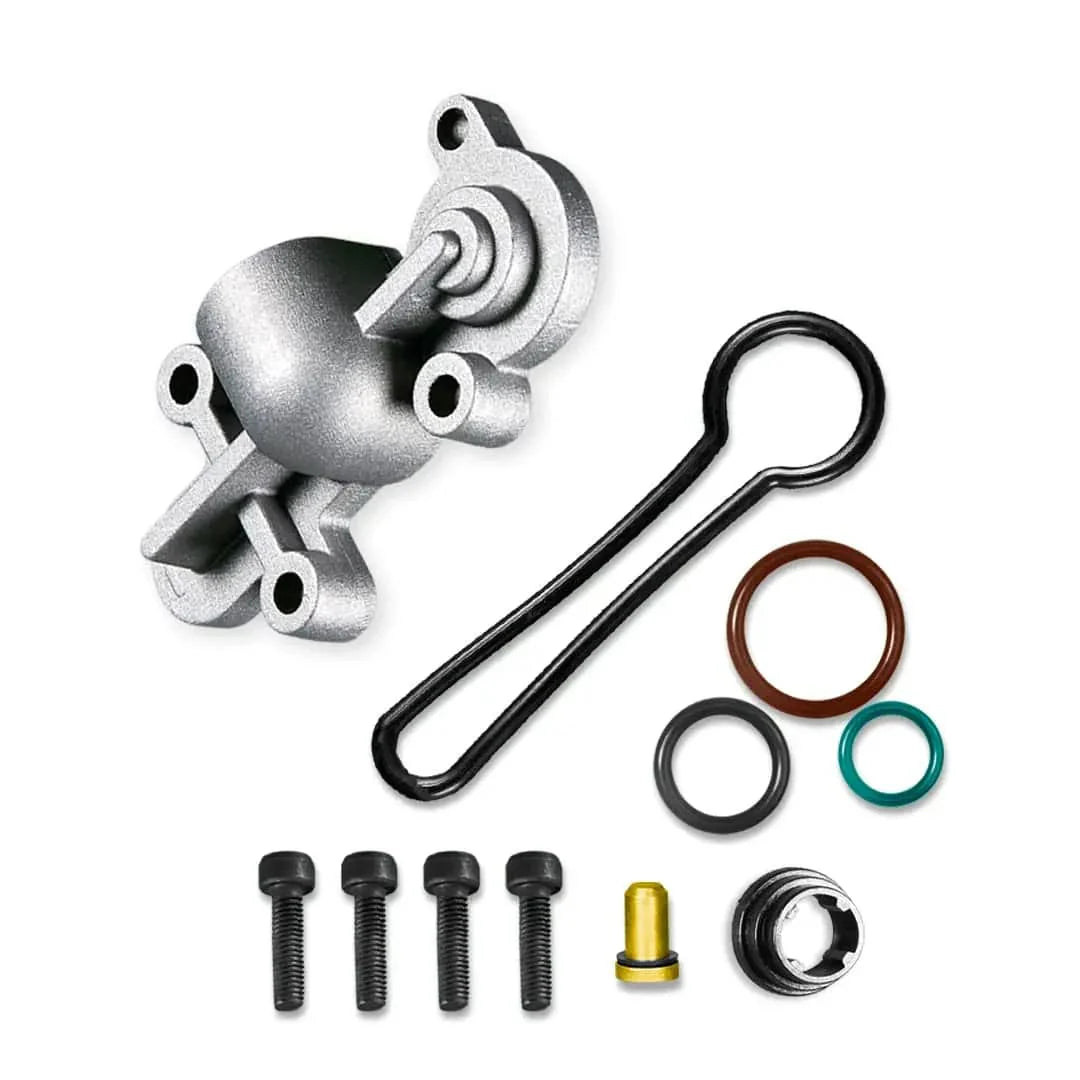
6.0L Powerstroke Blue Spring Fuel Pressure Regulator Upgrade
2003–2007 F-250 / F-350 / F-450 / F-550
- Fuel-pressure regulator upgrade
- Supports consistent fuel delivery
- Common maintenance-oriented 6.0L upgrade
6.0L Powerstroke Intake and Airflow Options
Intake components belong in a broader airflow strategy rather than being treated as an EGR fix. Before changing the intake, check the filter, charge-air connections and turbo condition.
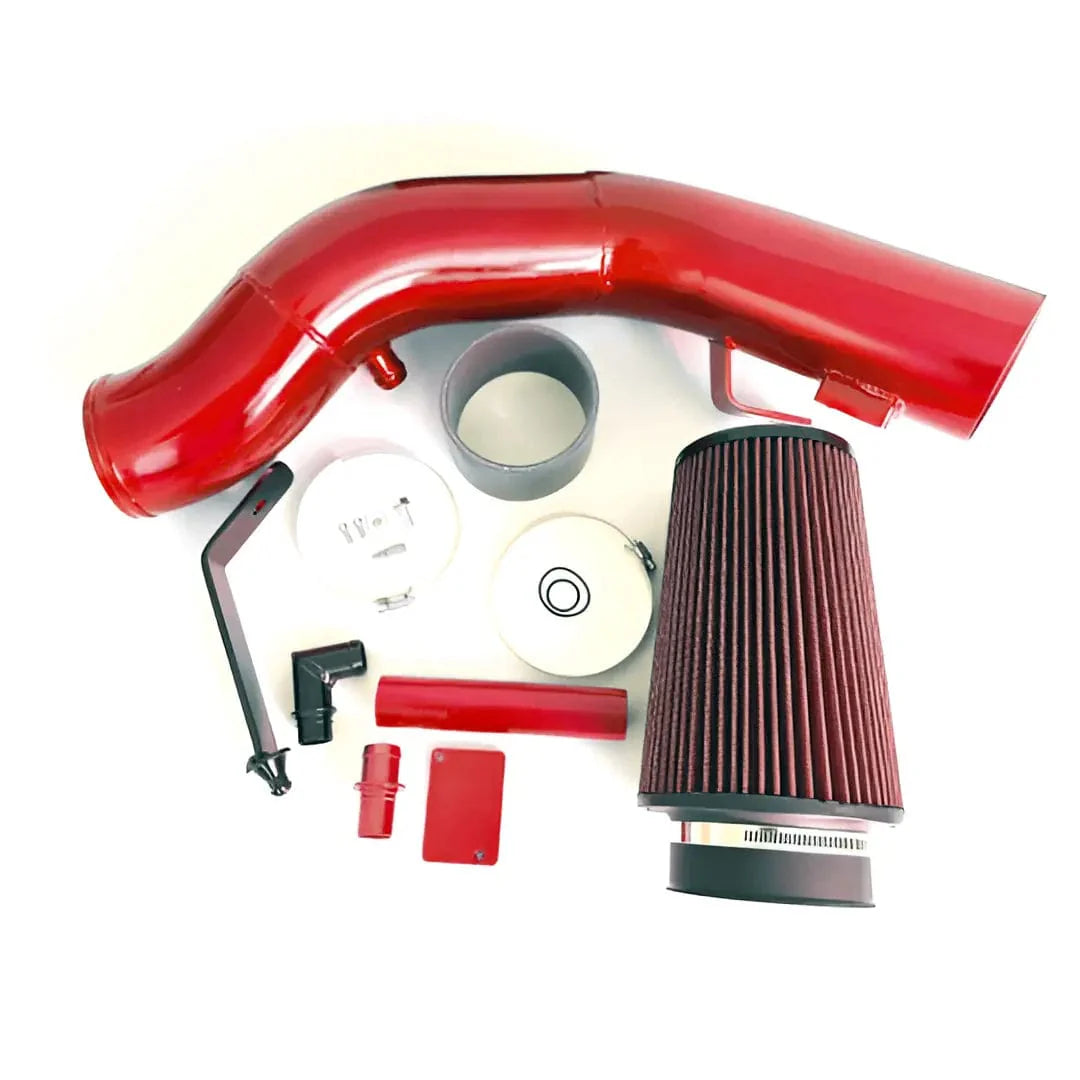
6.0L Powerstroke Cold Air Intake
Ford 2003–2007
- 6.0L-specific intake option
- Designed around engine airflow
- Check filter servicing and installation regularly
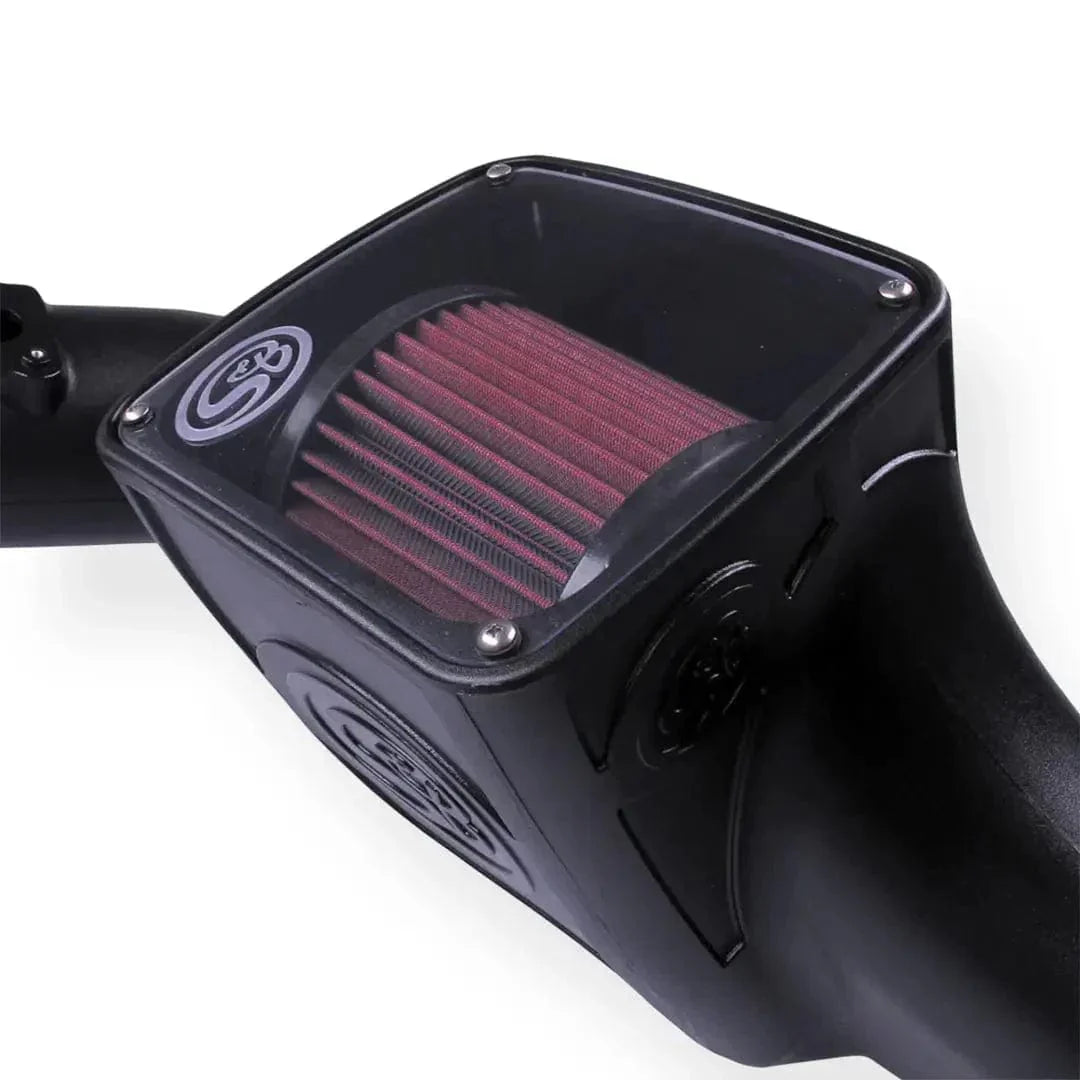
Powerstroke S&B Cold Air Intake
Multiple Ford Powerstroke applications
- Alternative Powerstroke intake system
- Available across multiple engine generations
- Select the correct 6.0L configuration
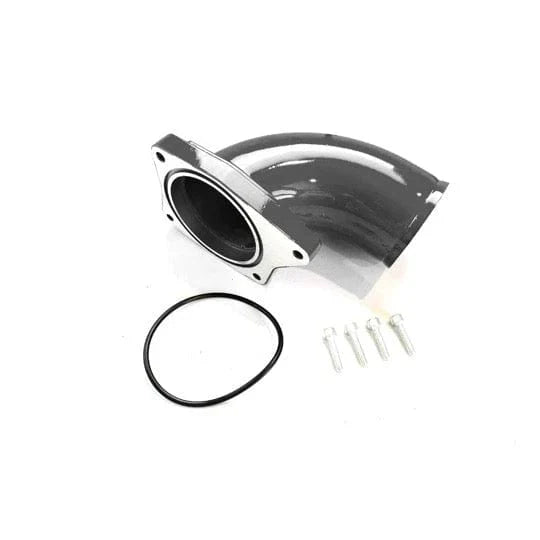
6.0L Powerstroke High-Flow Intake Elbow
Ford 2003–2007
- 6.0L intake-side component
- Can be paired with a broader airflow setup
- Verify surrounding intake configuration
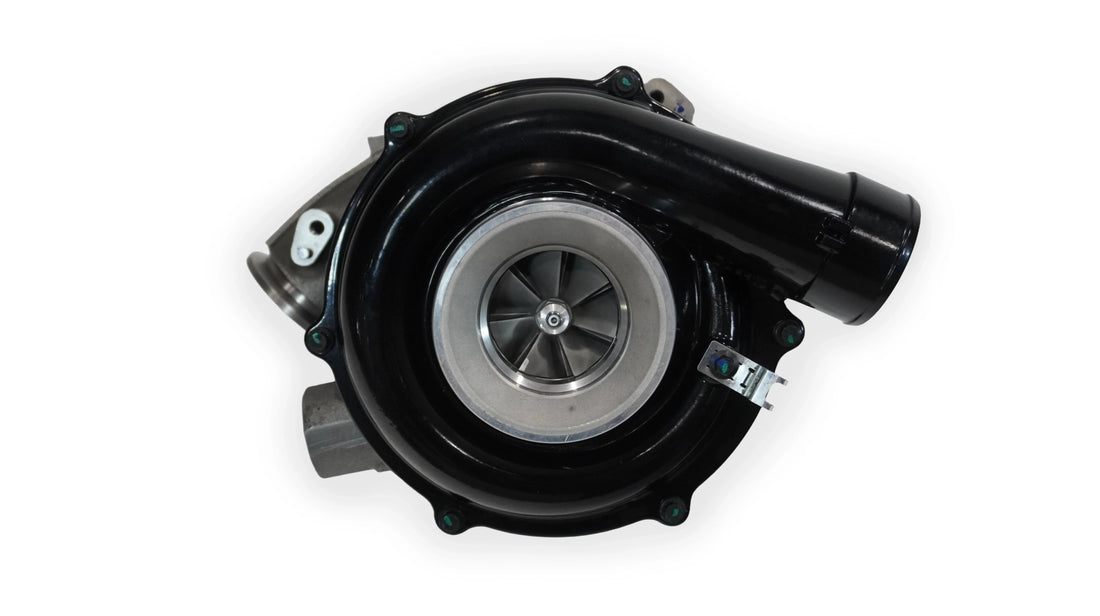
What About the 6.0L Powerstroke Turbocharger?
The 6.0L uses a variable-geometry turbocharger, making turbo condition an important part of diagnosing low boost, slow response or inconsistent performance.
Before replacing a turbo, check the complete system. Exhaust leaks, intake or charge-air problems, control issues and engine condition can create symptoms that resemble turbocharger failure.
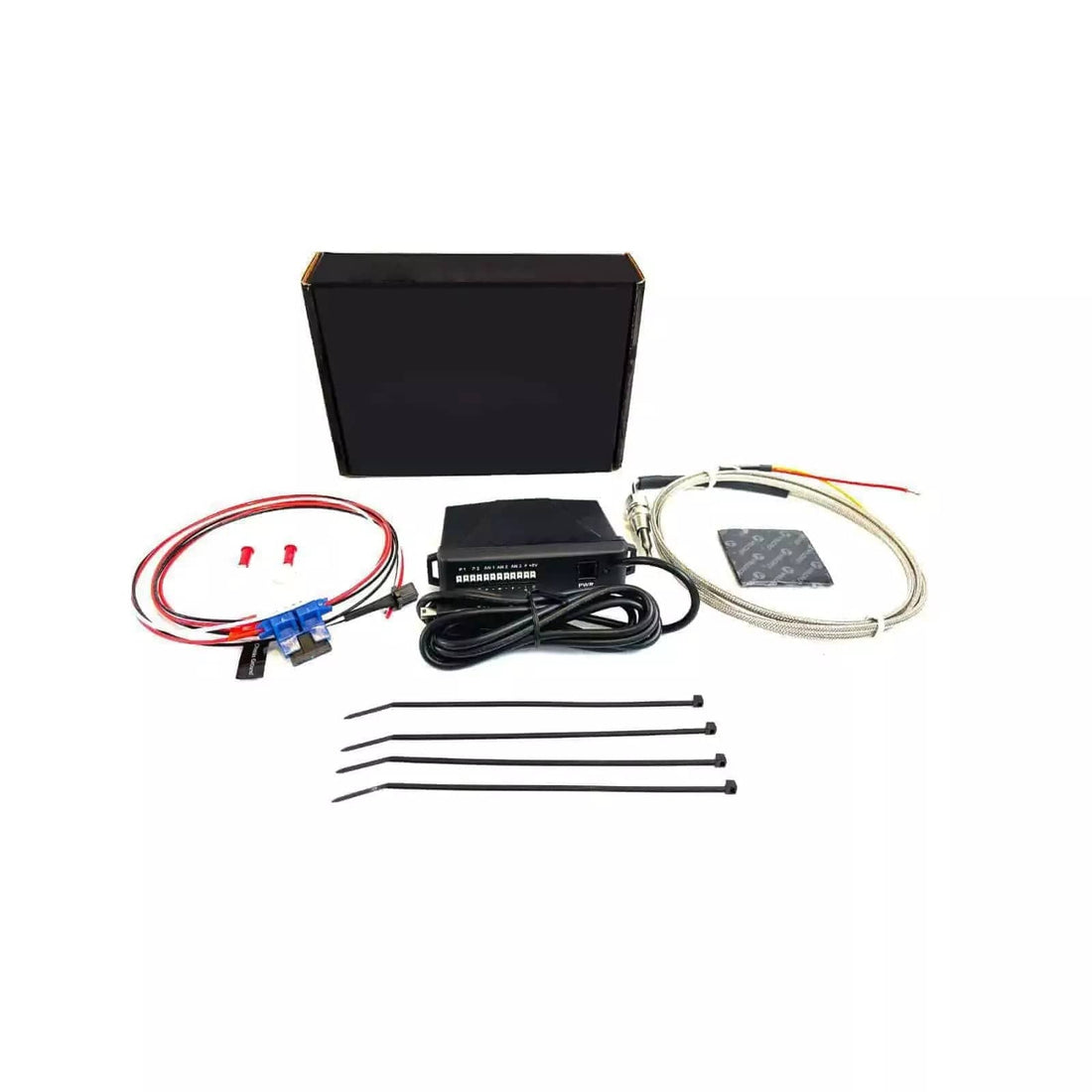
Why EGT Monitoring Matters on a Working 6.0L Diesel
Monitoring becomes more useful as load and performance demands increase. Exhaust-gas temperature gives the driver another data point when evaluating how a diesel is operating during towing, testing or sustained load.
Finishing a 6.0L Powerstroke Exhaust Setup
Mufflers and exhaust tips affect sound and final outlet configuration rather than solving an EGR-system problem. Match universal exhaust components to the pipe size being used.
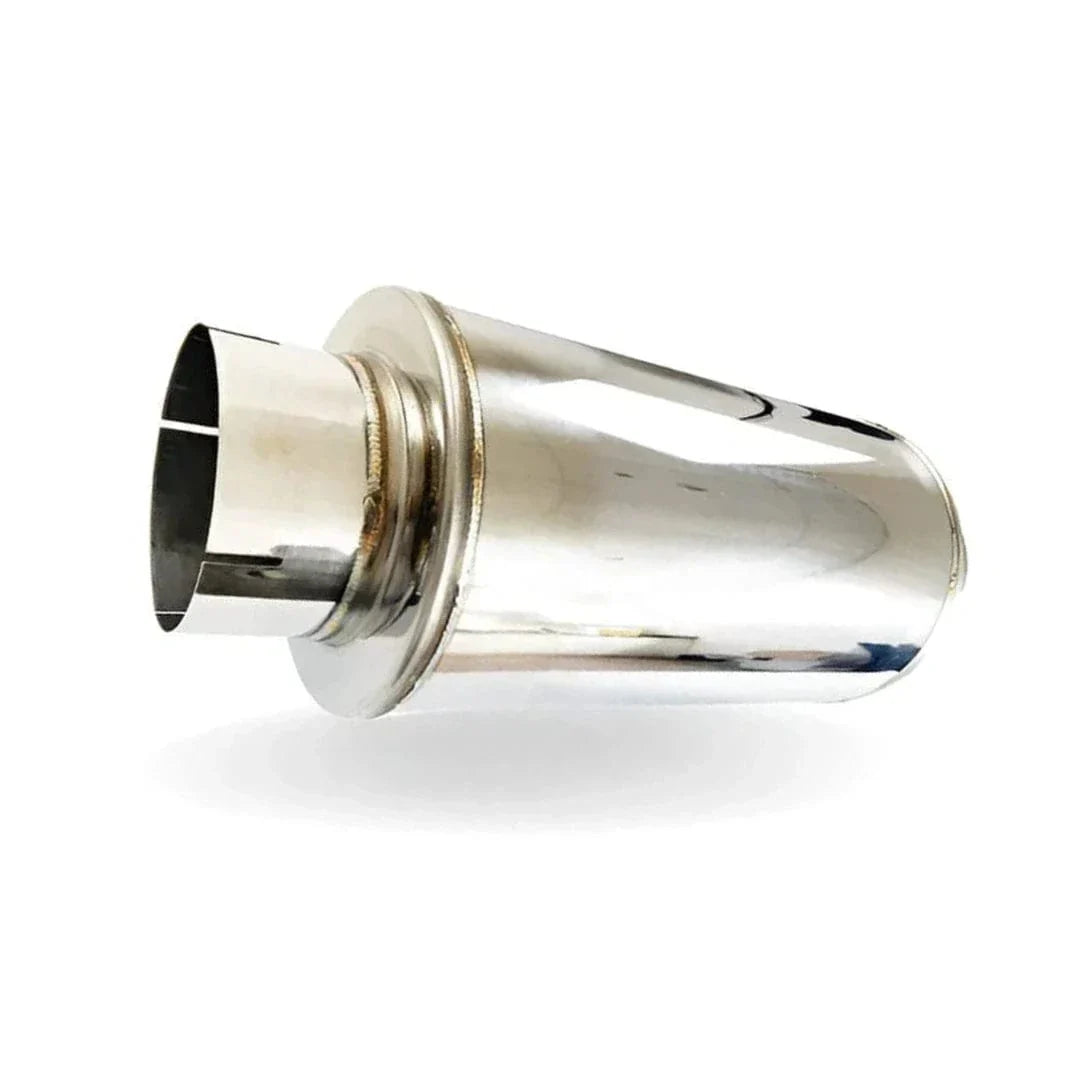
Stainless Steel Diesel Muffler
Universal diesel exhaust component
- Universal exhaust component
- Useful for changing exhaust sound characteristics
- Match dimensions to the exhaust system
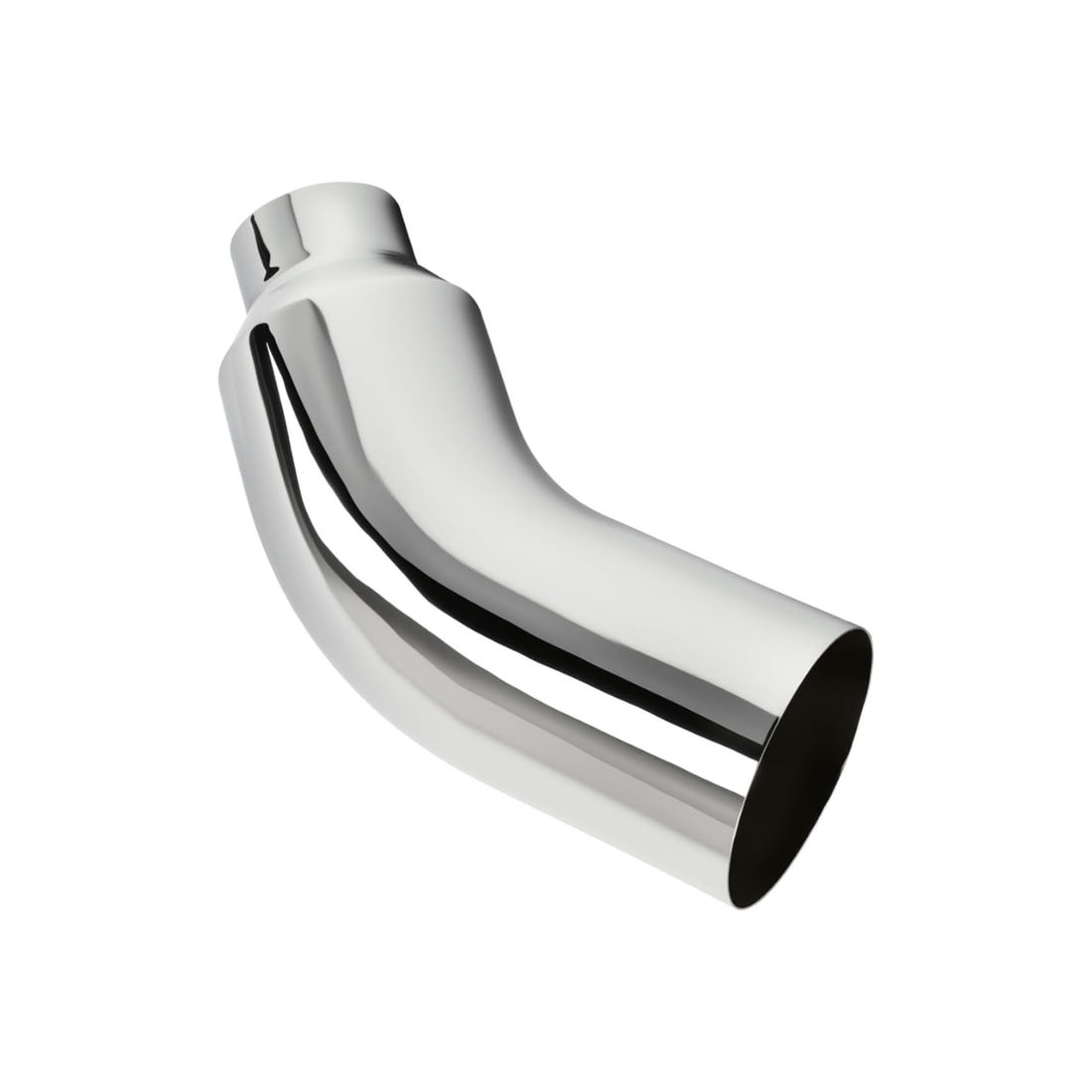
Universal Exhaust Tips for 4-Inch & 5-Inch Pipe
Chrome / Polished Steel / Satin Black
- Multiple inlet and outlet sizes
- Multiple finish options
- Choose according to exhaust pipe diameter
6.0L Powerstroke Buyer Checklist Before Ordering Parts
-
Confirm the Model Year Determine whether the truck is a 2003, 2004, 2005, 2006 or 2007 application.
-
Confirm the Engine Verify the truck actually has the 6.0L Powerstroke, especially when buying an older or heavily modified vehicle.
-
Identify Existing Tuning Determine whether a programmer or custom calibration is already associated with the truck.
-
Inspect Existing EGR Hardware Previous owners may already have repaired, replaced or modified components.
-
Inspect the Exhaust Check the existing pipe configuration, Y-pipe, connections, clamps and any prior modifications.
-
Scan for Diagnostic Codes Diagnose active problems before planning performance or emissions-related changes.
-
Check Cooling-System Condition Coolant quality, leaks and cooling-system performance deserve attention on any 6.0L build.
Delete, Repair or Restore: Which Approach Fits the Truck?
The correct path depends not only on mechanical goals but also on where and how the vehicle is operated.
| Approach | Purpose | Typical Application | Key Consideration |
|---|---|---|---|
| Repair Factory EGR | Maintain original emissions function | Highway-driven truck | Diagnose the actual failed component |
| Replace / Upgrade Components | Maintain emissions function with replacement hardware | Street-use or emissions-compliant configuration | Use components appropriate for emissions compliance |
| Restore Factory System | Return a previously modified truck to compliant operation | Registration, inspection or highway use | Mechanical hardware and calibration may both require restoration |
| Competition / Off-Highway Configuration | Dedicated application not relying on a highway-use emissions configuration | Only where the specific use is lawful | “Off-road” wording alone does not create a legal exemption |
Are EGR Delete Kits Legal for Street-Driven 6.0L Powerstroke Trucks?
In the United States, the Clean Air Act restricts tampering with required motor-vehicle emissions controls and restricts aftermarket devices intended to bypass, defeat or render those controls inoperative.
Describing a product as “race,” “competition,” “off-road” or “off-highway” does not by itself create a legal exemption for a registered highway vehicle. The vehicle's actual use, emissions certification and applicable federal, state and local requirements matter.
Owners who need a street-driven truck should consider repair, restoration or properly certified emissions-compliant aftermarket components. Check the rules that apply to the specific vehicle and jurisdiction before making emissions-related changes.
Which 6.0L Powerstroke Setup Should You Choose?
| Your Situation | Starting Point | Option to Compare |
|---|---|---|
| I need a complete configuration | Few or no existing aftermarket components | 6.0L All-in-One Kit |
| I already own some parts | Tuner, exhaust or other components already installed | Custom Kit Builder |
| I need EGR hardware only | Supporting configuration already handled | Standalone EGR Kit |
| I want an up-pipe included | Exhaust-side hardware is part of the project | EGR Kit with Up-Pipe |
| I need a tuner | No compatible tuning solution currently available | Mini Maxx V1 or Powerstroke Programmer |
| I am addressing cooling-system maintenance | Reliability-focused build | Coolant Filtration System |
| I am addressing fuel-pressure support | Fuel-system maintenance or upgrade | Blue Spring Upgrade |
Starting from scratch? Compare the complete 6.0L package. Already have a tuner, exhaust or EGR components? Build the remaining configuration around what your truck already has.
View the 6.0L Powerstroke All-in-One Kit Build a Custom 6.0L Kit6.0 Powerstroke EGR Delete Kit FAQ
What is a 6.0 Powerstroke EGR delete kit?
What years does a 6.0L Powerstroke EGR kit fit?
Will a 6.0 EGR delete kit fit a 2005 Ford F-250?
What about a 2006 F-250 6.0 EGR delete kit?
Is the same type of kit available for a 2003 or 2004 6.0 Powerstroke?
What makes a good 6.0 Powerstroke EGR delete kit?
Is a complete 6.0 Powerstroke kit better than an EGR kit alone?
Can I build a custom 6.0 Powerstroke kit instead of buying a fixed bundle?
Does a 2003–2007 6.0 Powerstroke have a DPF?
Does a 6.0 Powerstroke use DEF?
What should I inspect before changing the EGR configuration on a 6.0L?
What tuner can be used with a 6.0 Powerstroke?
What is a 6.0 Powerstroke Blue Spring upgrade?
Is coolant filtration relevant to a 6.0 Powerstroke?
Are EGR delete kits legal on street-driven trucks?
The Bottom Line
Choosing parts for a 2003–2007 6.0L Powerstroke should start with the truck itself: exact year, model, existing EGR configuration, tuning, exhaust, cooling-system condition and intended use.
If you need the main components together, the all-in-one 6.0L Powerstroke EGR kit with tuning provides a straightforward starting point. If the truck already has compatible parts—or you simply want more control over the configuration—the Custom Kit Builder allows the setup to be built step by step around what is actually needed.
For long-term results, treat the 6.0L as a complete system. EGR hardware is only one part of the equation; cooling, fuel pressure, turbo condition, intake airflow, exhaust integrity, monitoring and correct calibration all contribute to how the truck operates.
Technical References
This guide was structured using technical information and emissions guidance from established primary sources. The references below link directly to Ford Motor Company and U.S. Environmental Protection Agency resources for additional verification and context.
- Ford Power Stroke Diesel — 6.0L Remanufactured Diesel Engine Reference — Ford-hosted information for 2003–2007 6.0L Power Stroke applications, including the factory EGR cooler in the complete-engine component list.
- Ford Motor Company — Automotive Glossary — Ford definitions for emissions-system terminology, including Exhaust Gas Recirculation (EGR) and Diesel Particulate Filter (DPF).
- U.S. EPA — Aftermarket Defeat Devices and Tampering Fact Sheet — Clean Air Act information covering vehicle emissions tampering and aftermarket defeat devices.
- U.S. EPA — Vehicle and Engine Tampering Enforcement Policy — EPA enforcement policy and compliance guidance concerning vehicle and engine tampering and aftermarket defeat devices.
About This Guide
This article is intended as an educational and product-selection resource for the 2003–2007 Ford 6.0L Powerstroke platform. Product designs, available options and fitment can change, so the current product configuration should always be checked before ordering. Technical procedures should follow the applicable service information and component instructions.
Choose a complete package or build a 6.0L configuration around the parts already on your truck.
View the Complete 6.0L Powerstroke Kit Build Your Custom Kit Step by Step